
Organisations need to know whether supplier performance remains acceptable, whether risks have changed, whether issues are being controlled and whether continued approval is supported by current evidence. When those records sit in separate spreadsheets and systems, the current assurance position becomes difficult to see and even harder to defend.
One supplier and one assurance position
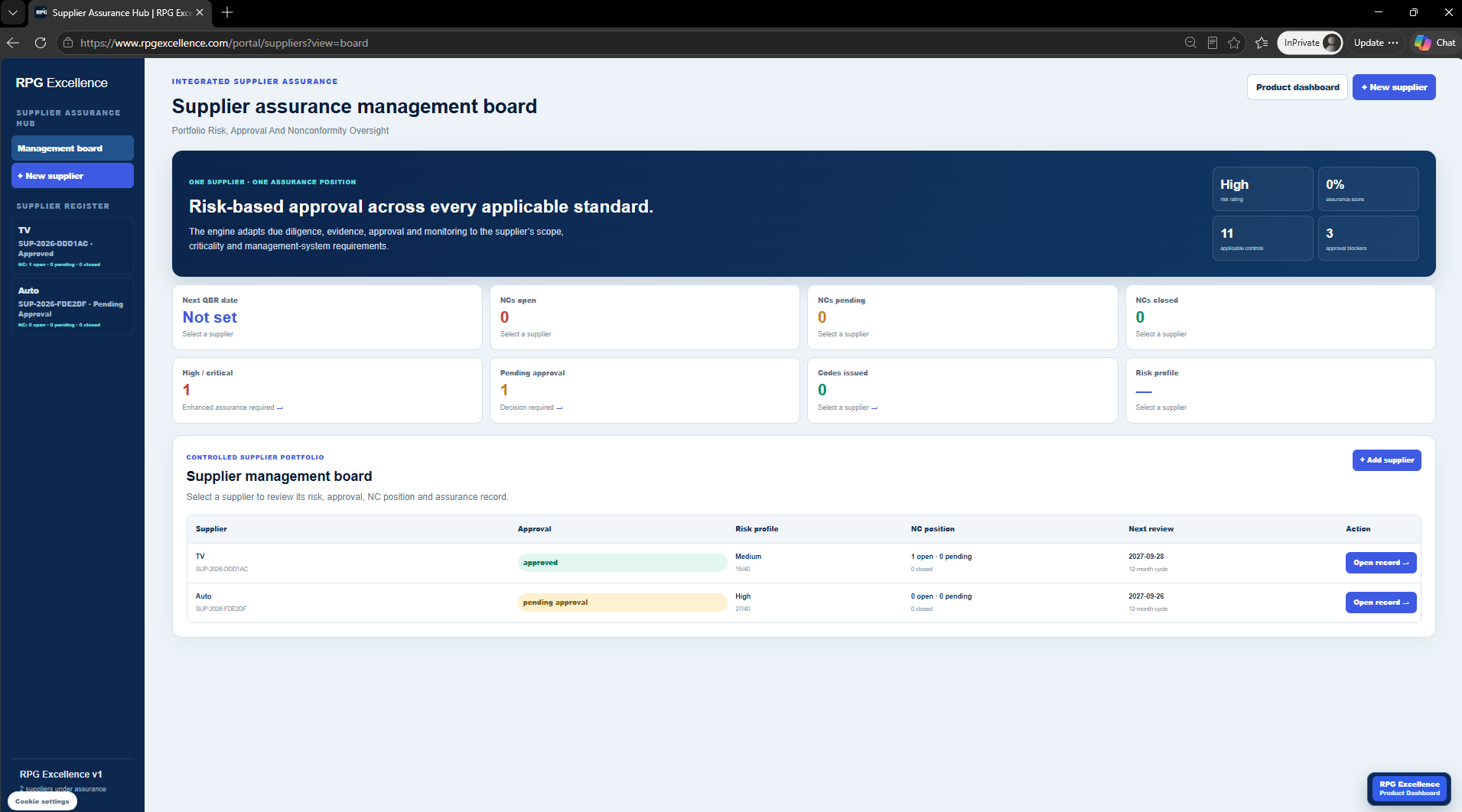
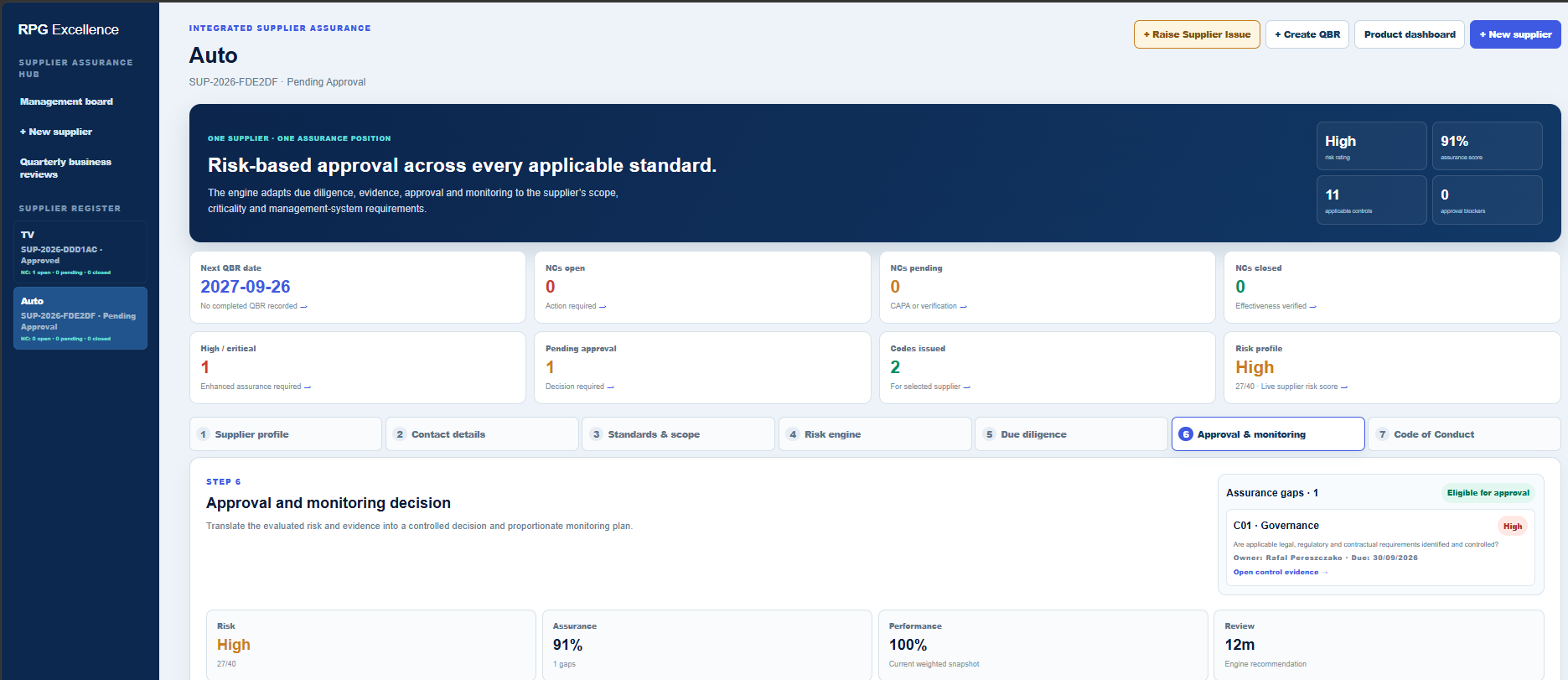
The Supplier Assurance Hub brings qualification, due diligence, evidence, approval, performance and monitoring together. Its management board provides a portfolio view of approval, risk, nonconformity position and next review dates, while each supplier record presents a single assurance score, applicable controls, blockers and monitoring status.
Decision-makers can move from the portfolio view into the controlled supplier record without losing the context behind the result.
Risk-based approval across applicable requirements
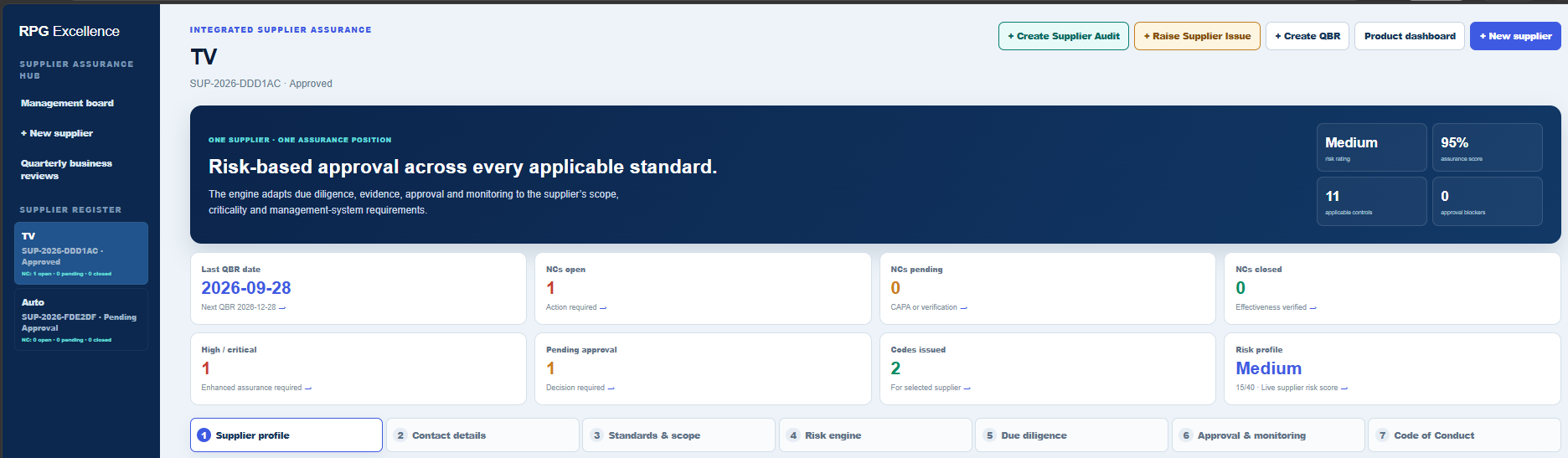
The assurance engine adapts due diligence and monitoring to the supplier’s scope and criticality. It can support controls arising from ISO 9001, AS9100, ISO 14001, ISO 45001, ISO IEC 17024 and ISO IEC 17025 where those requirements are applicable to the organisation and purchased product or service.
A routine service provider and a critical aerospace or laboratory supplier do not create the same exposure. The hub makes that distinction visible and supports proportionate approval, evidence and review decisions.
Quarterly business reviews based on evidence
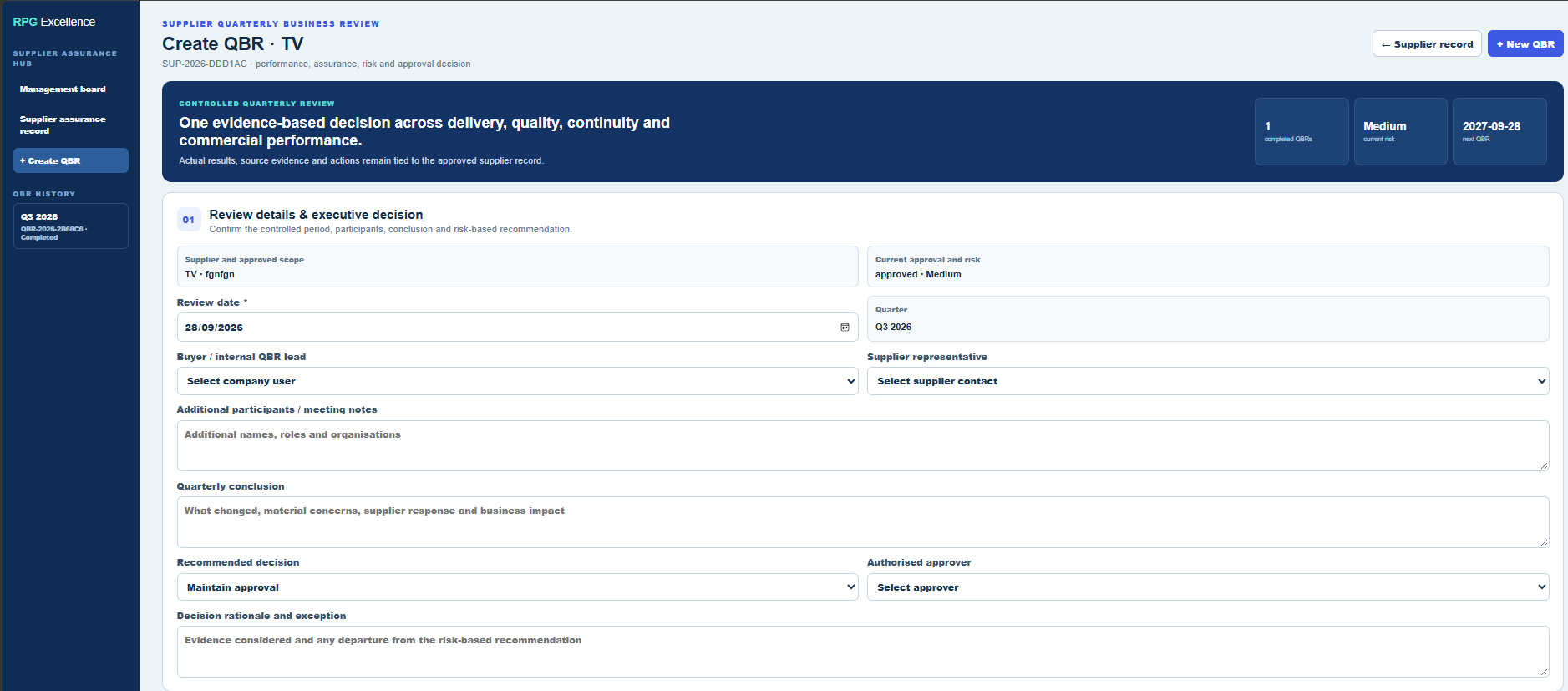
The controlled QBR workspace turns a supplier meeting into an auditable decision process. The buyer or internal QBR lead is selected from the company user list, while the supplier representative is selected from the supplier contact register.
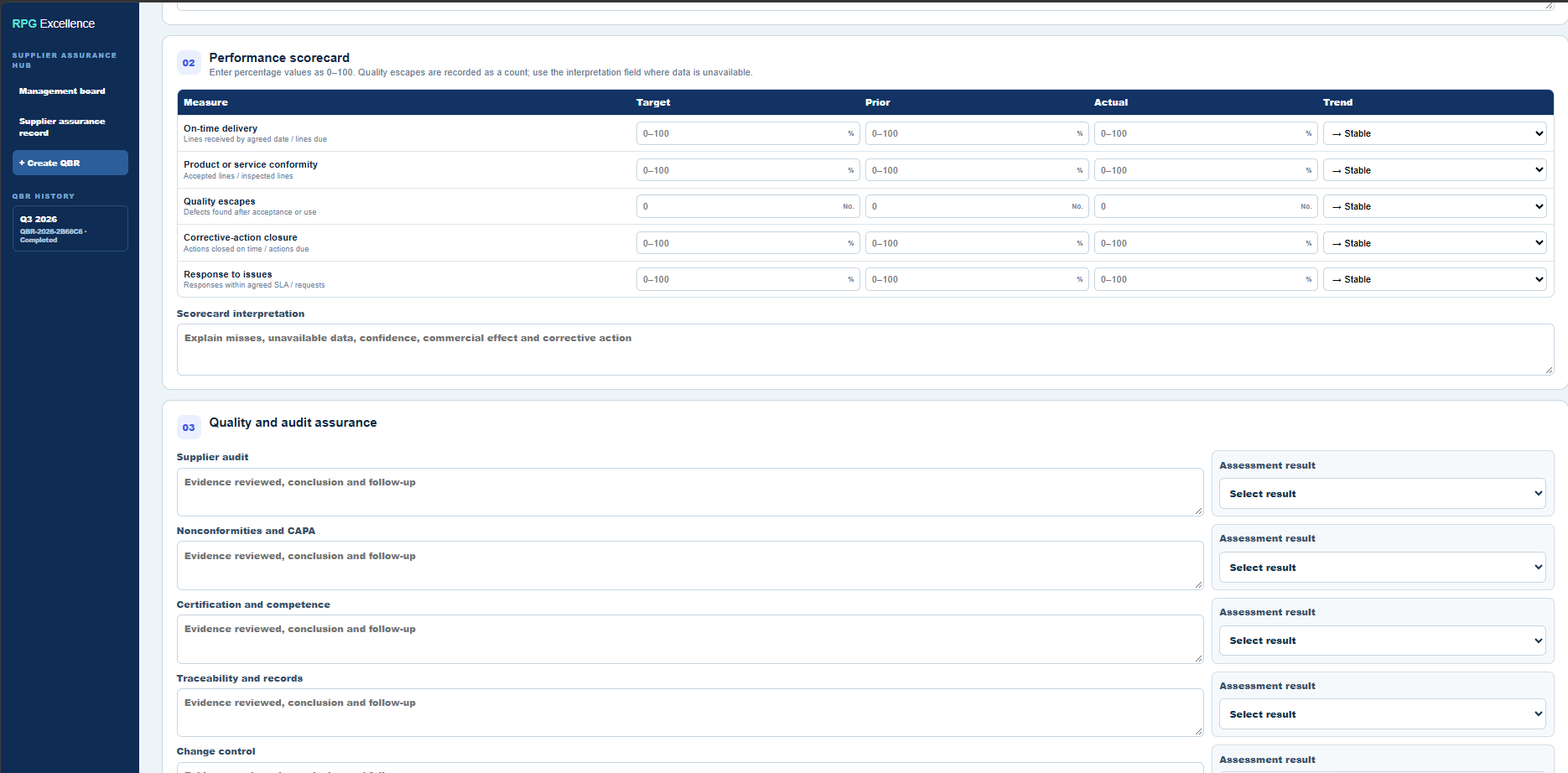
A structured scorecard captures on-time delivery, product or service conformity, quality escapes, corrective-action closure and response to issues. Prior, target and actual values are considered alongside trend and interpretation, allowing the reviewer to explain unavailable data, confidence, commercial impact and required action.
Quality risk continuity and commercial performance
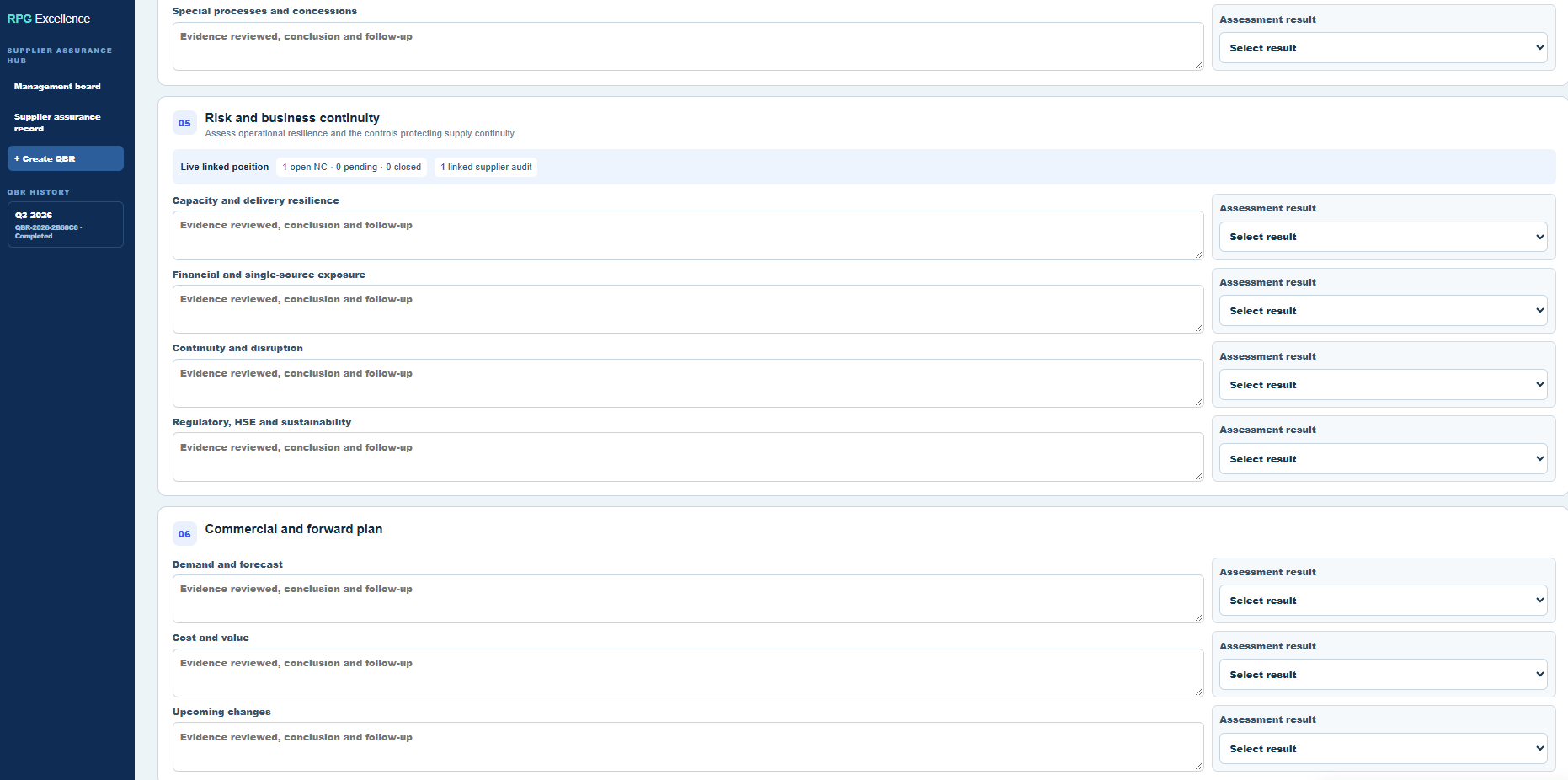
A useful supplier review must extend beyond delivery percentage. The QBR evaluates audit outcomes, nonconformities and CAPA, certification and competence, traceability, change control, special processes, capacity, financial or single-source exposure, disruption controls, regulatory matters, HSE, sustainability, demand and value.
Each line records the evidence reviewed, the conclusion and whether requirements are met, partially met or not met. This creates a consistent assessment while preserving the professional judgement behind the result.
Live links to issues actions and audit trail
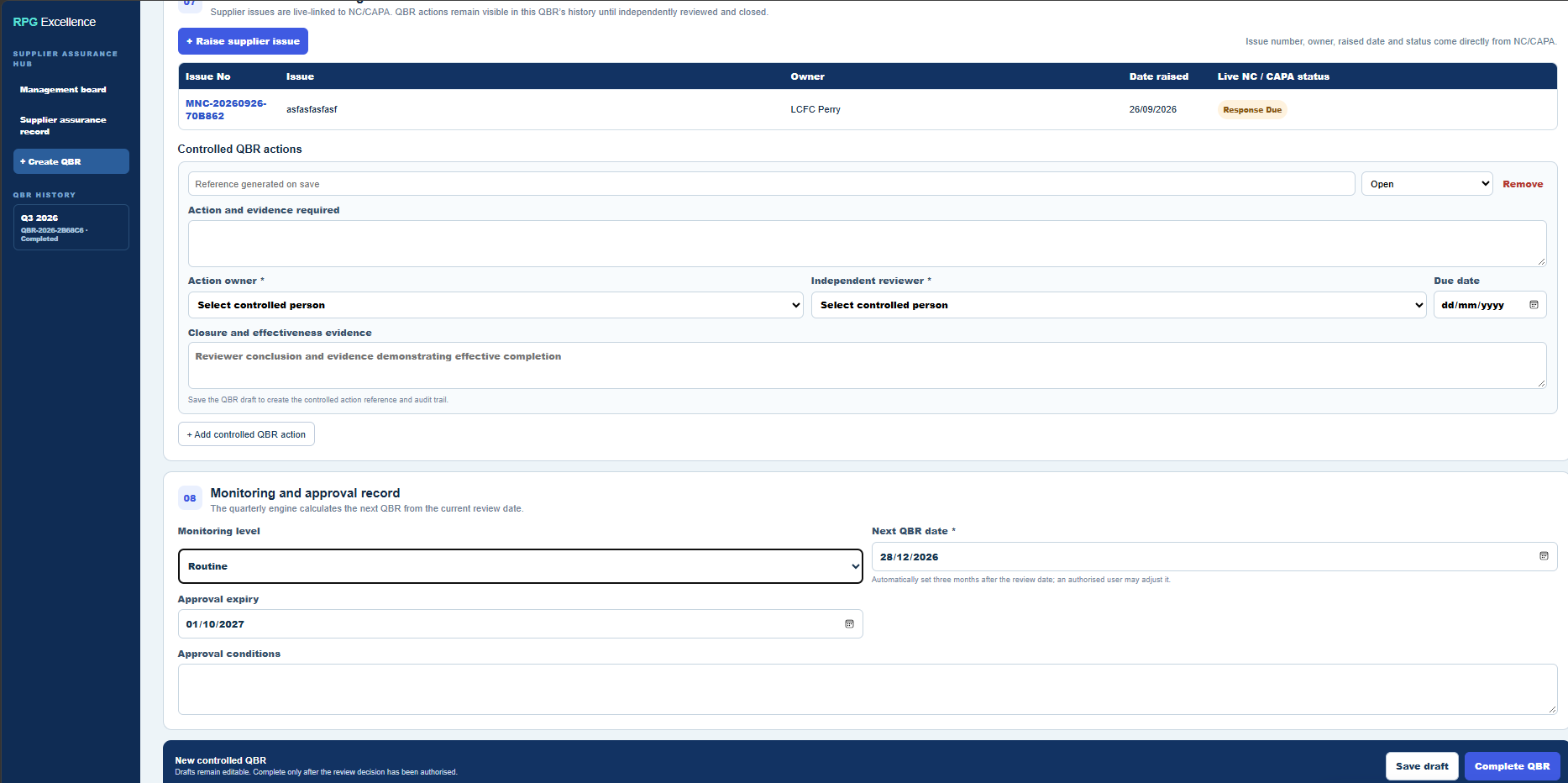
Supplier issues remain connected to the NC and CAPA workflow. The QBR displays the live issue reference, owner, date raised and controlled status from the underlying record, reducing duplicate entry and conflicting status information.
QBR actions are separately controlled with an action owner, independent reviewer, due date, closure evidence and effectiveness conclusion. Open actions remain visible in QBR history until they are reviewed and closed.
From review to an authorised decision
The final stage records the monitoring level, approval expiry, conditions and next QBR date. The next quarterly review is calculated from the current review date and can be adjusted by an authorised user where the evidence supports a different interval.
The result is a traceable supplier decision supported by current performance, risk, issues, audits, actions and evidence. That gives auditors and leadership a clearer explanation of why a supplier remains approved, requires conditions or needs enhanced oversight.
How RPG Excellence supports the control
The RPG Excellence Supplier Assurance Hub connects supplier profiles, contacts, standards and scope, risk, due diligence, approval, monitoring, audits, NC/CAPA, Code of Conduct records and controlled quarterly business reviews.
Open the Supplier Assurance Hub →This article provides general information and does not replace a task-specific assessment, competent professional judgement or legal advice.