A continuity programme cannot make proportionate recovery decisions until it understands the environment in which the organisation operates, the internal conditions that shape capability and the parties whose needs create legal, contractual, operational or reputational obligations.
Turn external change into continuity decisions
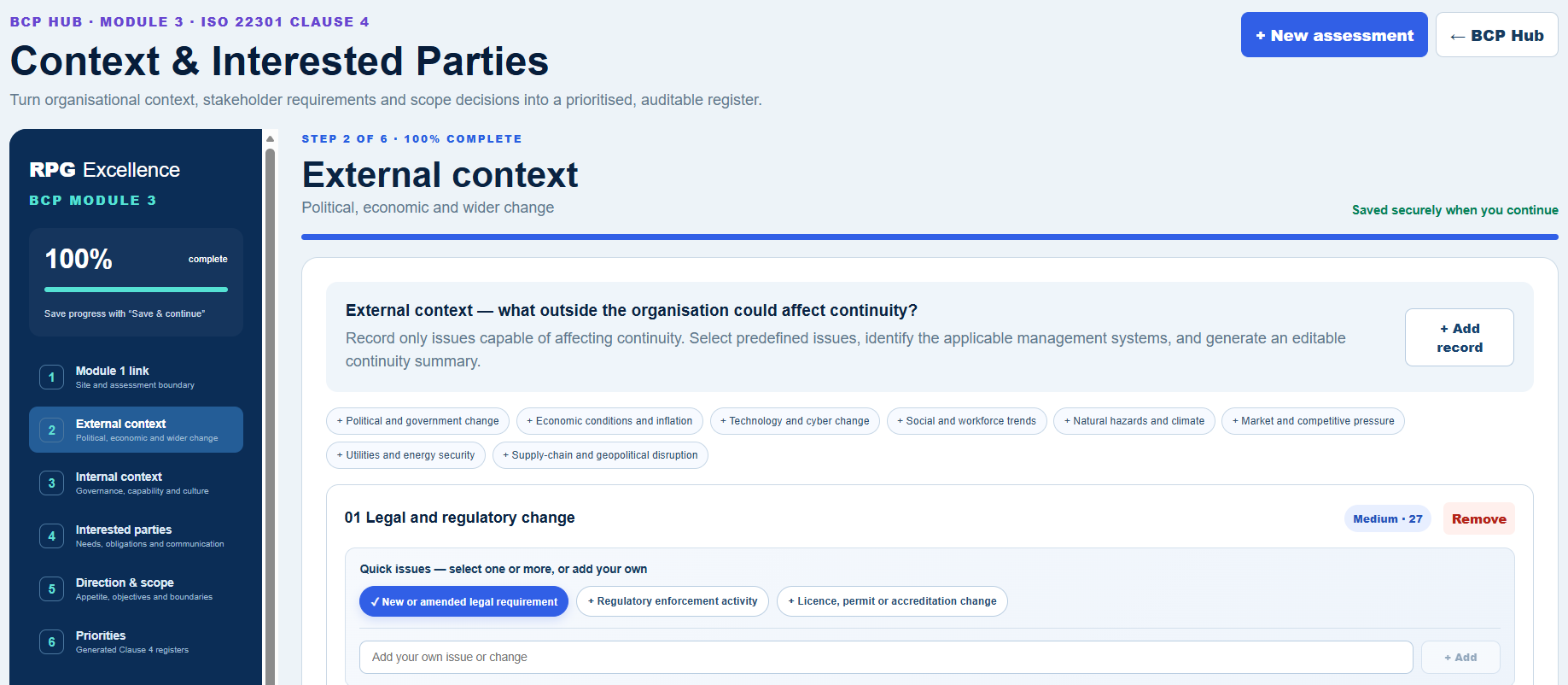
Module 3 prompts the organisation to consider political and regulatory change, economic conditions, technology and cyber change, social and workforce trends, natural hazards, market pressure, utilities, energy security and supply-chain disruption.
Each selected issue is assessed for continuity relevance, management-system applicability and priority. The engine generates an editable summary while retaining the evidence and management judgement behind the decision.
Expose internal conditions that influence resilience
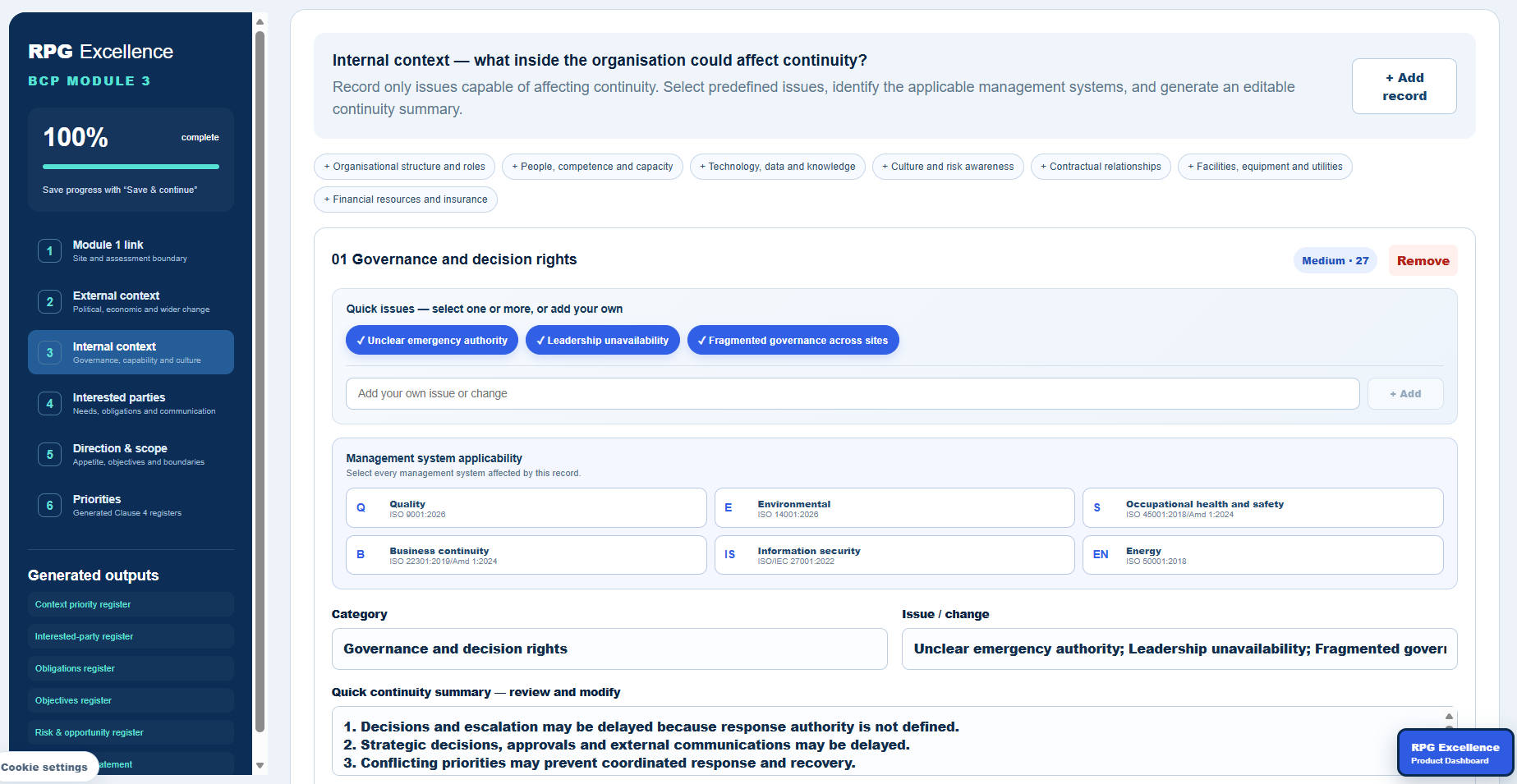
Governance, decision rights, leadership availability, competence, capacity, technology, culture, contractual relationships, facilities and financial resources can all determine whether a response works under pressure.
The workspace connects each internal issue to the management systems it affects and creates a reviewable continuity summary. This makes unclear authority, fragmented governance and single points of dependency visible before an incident tests them.
Connect interested parties to accountable owners
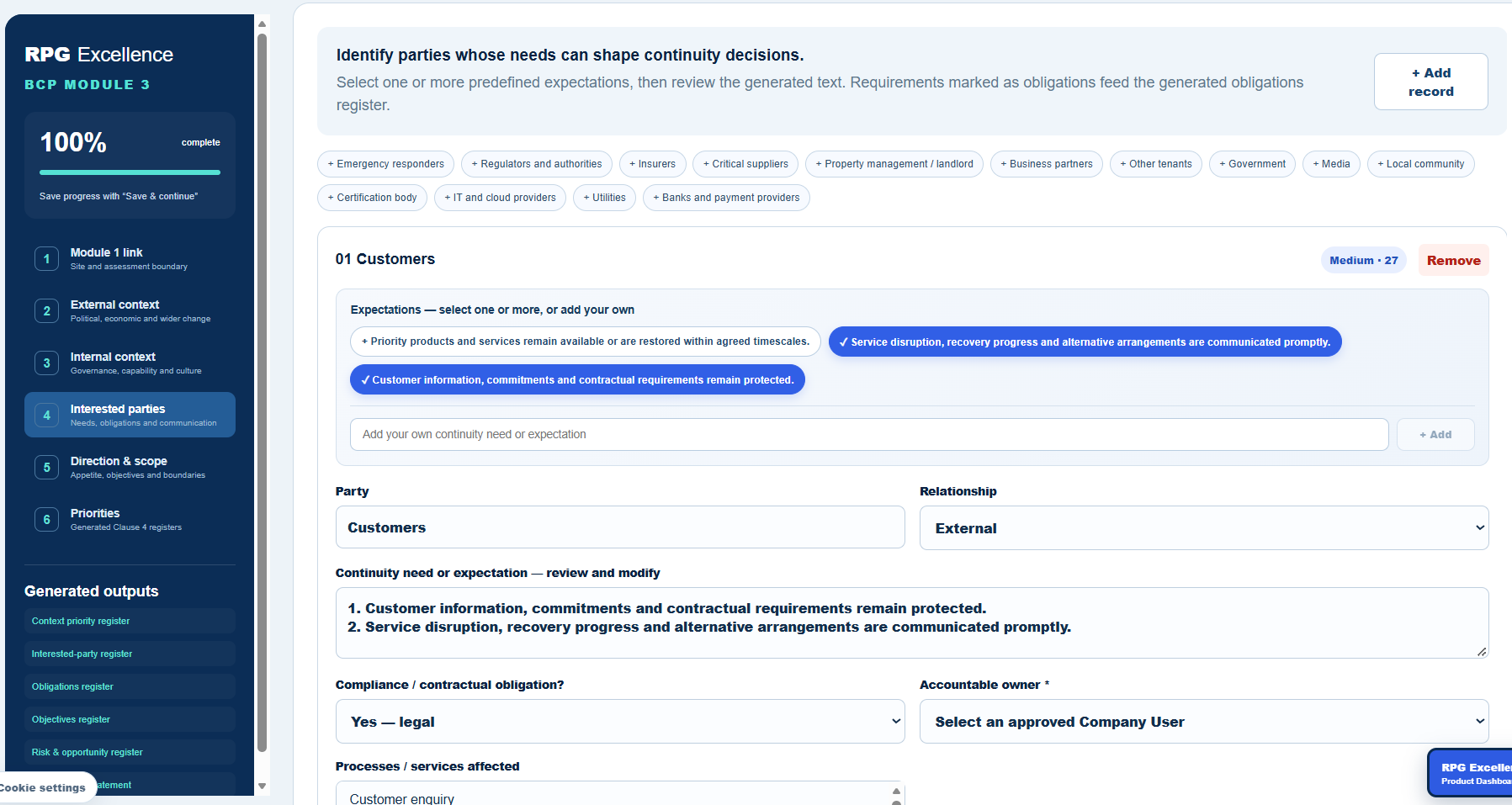
Customers, employees, emergency responders, regulators, insurers, critical suppliers, landlords, technology providers, utilities, banks and local communities can each shape continuity requirements.
For every party, the user records the expectation, relationship, legal or contractual significance, affected services and accountable Company User. The result is a controlled interested-party register rather than a generic stakeholder list.
Define communication before disruption
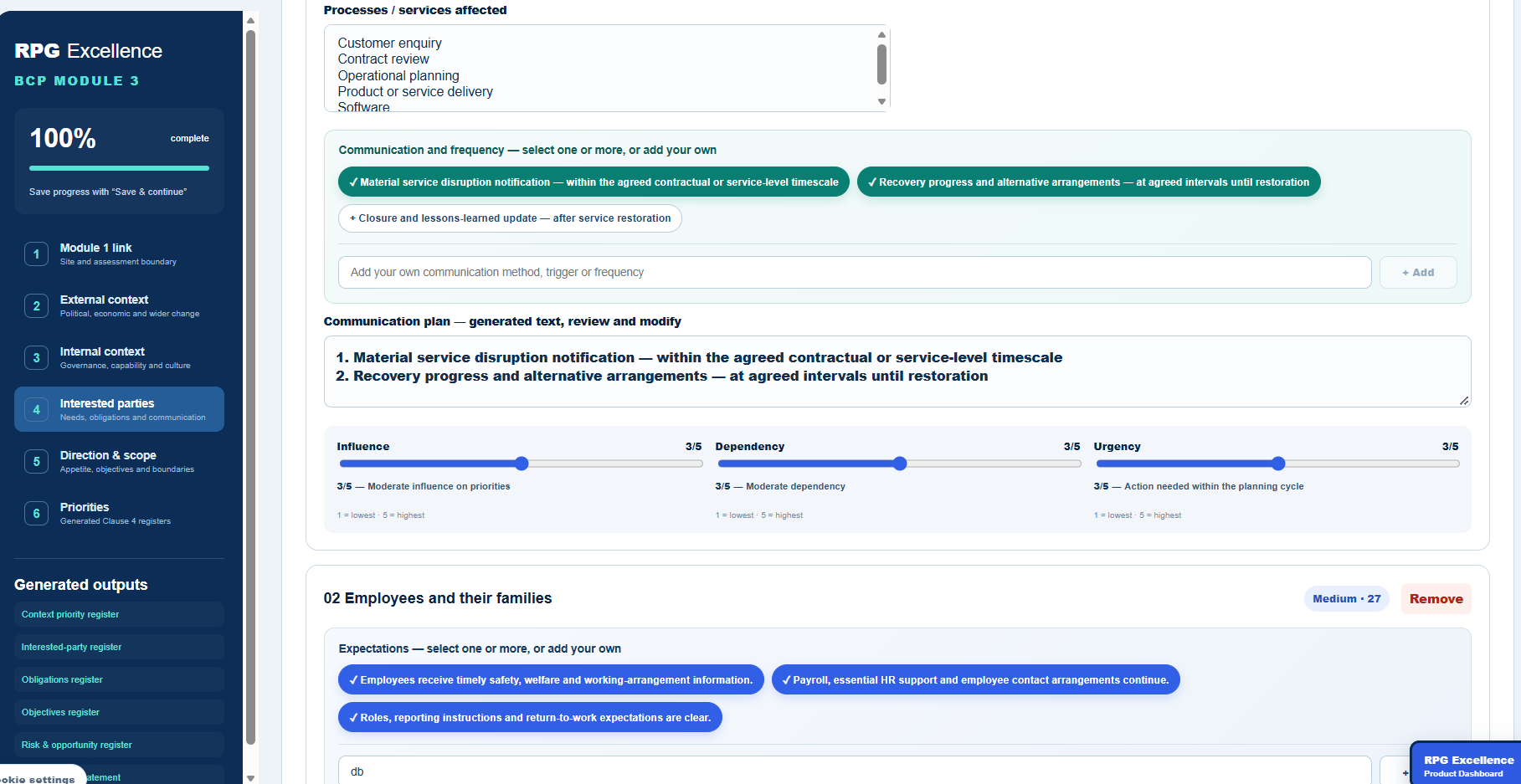
Continuity communication should not be improvised during an incident. Module 3 records what must be communicated, the trigger or frequency and the processes and services affected.
Customer disruption notices, recovery updates, employee welfare information, working arrangements and closure communications remain connected to the relevant interested party and obligation.
Generate direction, objectives and scope from evidence
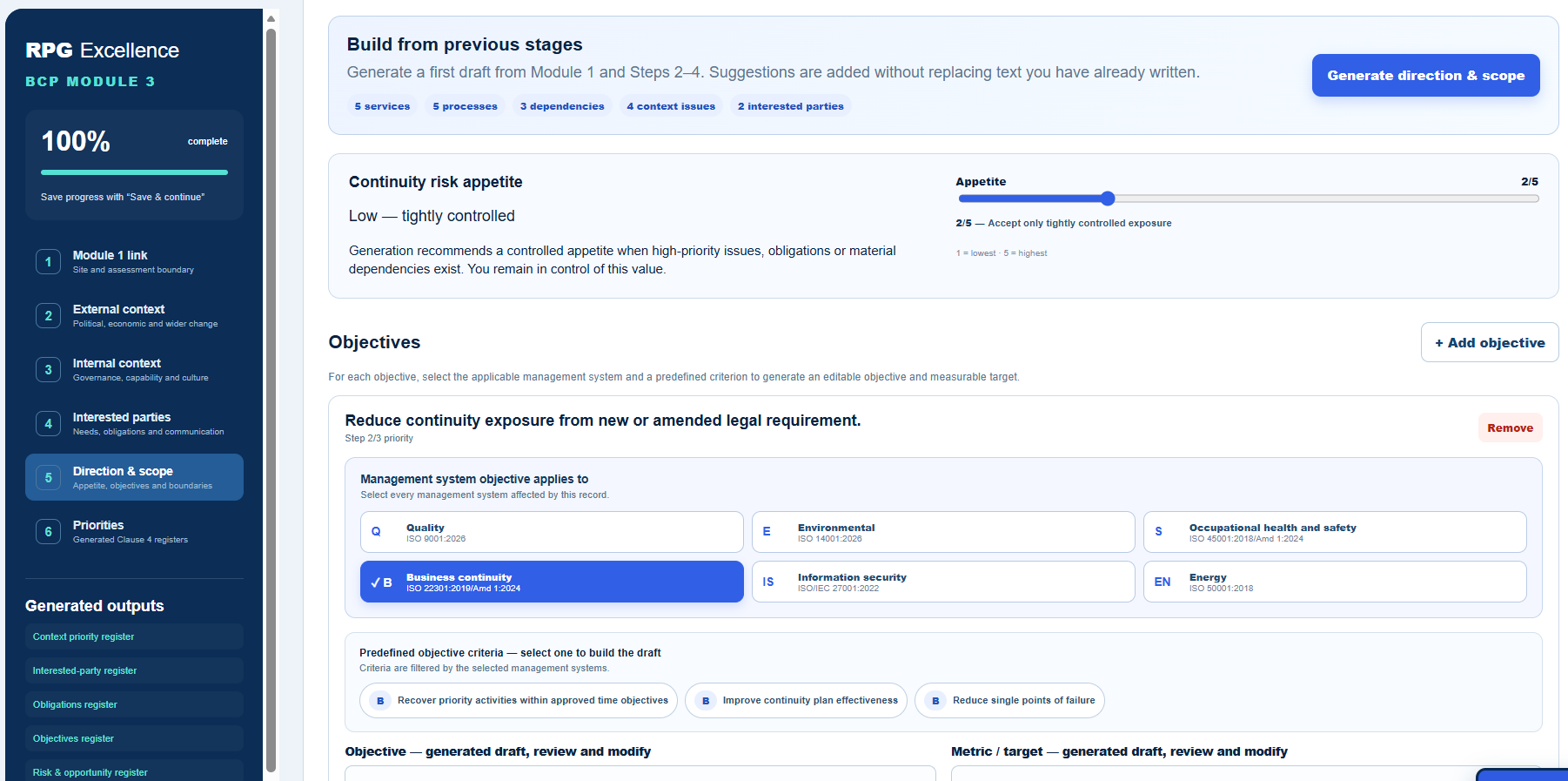
The direction-and-scope stage builds from the site profile, context issues and interested-party requirements. It recommends a continuity risk appetite and supports measurable objectives linked to the applicable management systems.
Users remain in control: generated text can be reviewed and amended, while the source data and relationships remain traceable. This creates a defensible route from organisational context to BCMS scope and objectives.
Create controlled Clause 4 outputs
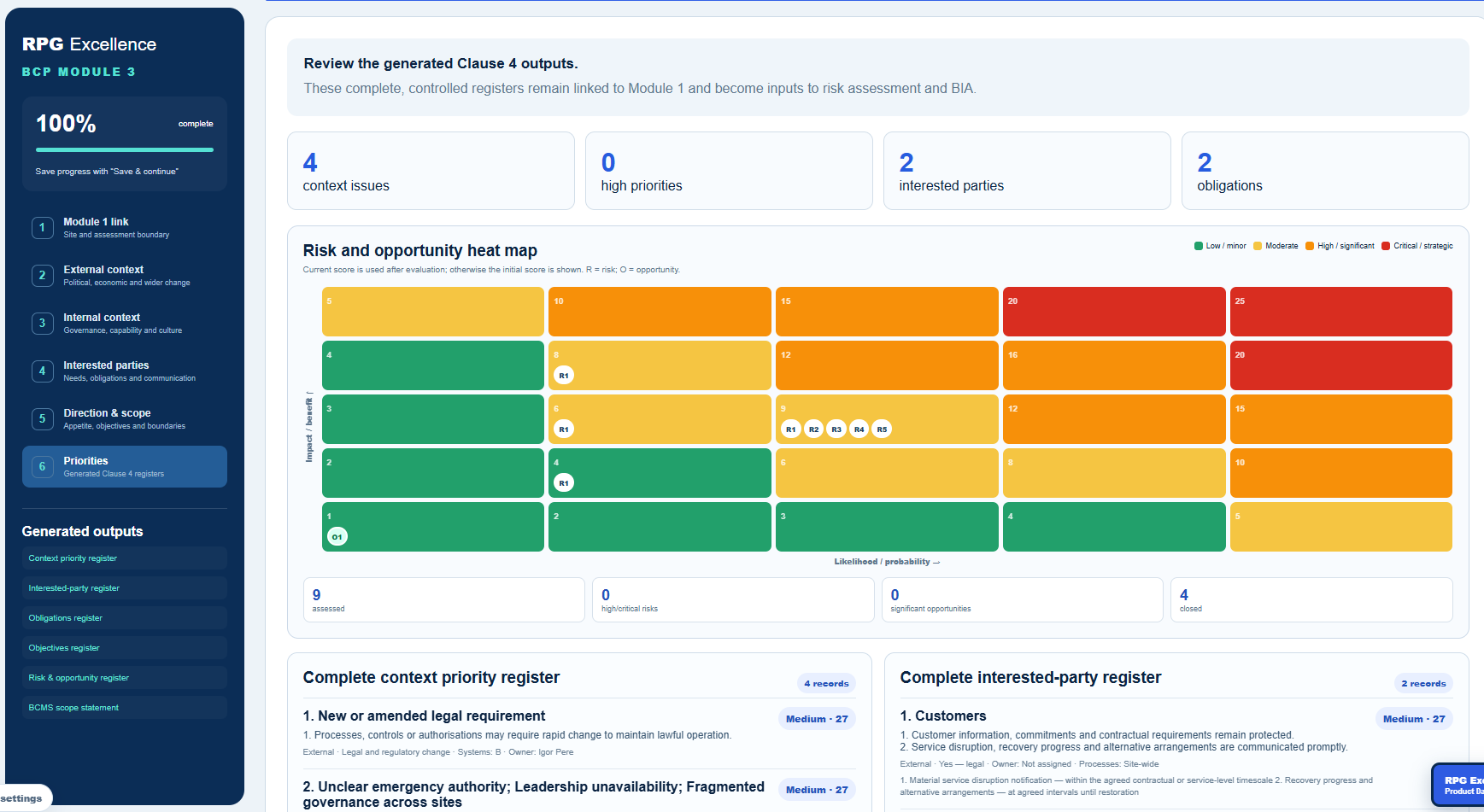
The final stage produces a context-priority register, interested-party register, obligations register, objectives register, risk-and-opportunity register and BCMS scope statement.
A live heat map makes the distribution of risks and opportunities visible. The outputs then become controlled inputs to disruption-risk assessment and business impact analysis, preserving the chain from context to recovery decision.
How RPG Excellence supports the control
RPG Excellence Business Continuity Module 3 provides a six-stage ISO 22301 Clause 4 workflow with dynamic prompts, editable generated summaries, Company User ownership, prioritisation, communication planning and controlled registers.
Open Module 3 Context & Interested Parties →This article provides general information and does not replace a task-specific assessment, competent professional judgement or legal advice.